
Fentanyl cleanup is not something a bottle of bleach and a roll of paper towels can handle. That surprises a lot of people, and it’s one of the most important things we want to clarify. The widespread belief that standard household or commercial cleaning products can remove fentanyl residue is not just a myth — it’s a genuinely dangerous one. If you’re dealing with a property in Dallas, Fort Worth, or anywhere in North Texas where fentanyl exposure may have occurred, here’s what you need to know before anyone picks up a sponge.
Why Fentanyl Is Different From Other Contaminants
Fentanyl is a synthetic opioid so potent that even a tiny amount — measured in micrograms — can cause serious harm or be fatal. It can be absorbed through the skin, inhaled as airborne particles, or accidentally ingested. That physical reality changes everything about how a contaminated space needs to be treated.
Standard cleaning products work by breaking down or lifting surface-level dirt, bacteria, and some viruses. Fentanyl residue behaves differently. It clings stubbornly to porous materials like carpet, drywall, wood, and fabric. It can settle into HVAC systems and spread through a structure. It does not respond reliably to general-purpose disinfectants or degreasers. Scrubbing a surface with a store-bought cleaner may actually disturb the residue and spread microscopic particles into the air, increasing the risk of exposure rather than reducing it.
The Testing Step Most People Skip
Before any meaningful cleanup can happen, the extent of contamination needs to be established. That means proper drug residue testing — not a guess, and not a visual inspection. Fentanyl is invisible. A room can look completely clean and still carry dangerous levels of residue on surfaces or in the air.
We use certified testing methods to identify where contamination is present and how far it has spread. This step protects everyone involved: the cleanup crew, the property owner, and anyone who will use the space afterward. Skipping it and going straight to cleaning is a bit like treating a wound without knowing how deep it goes.
What Proper Fentanyl Cleanup Actually Requires
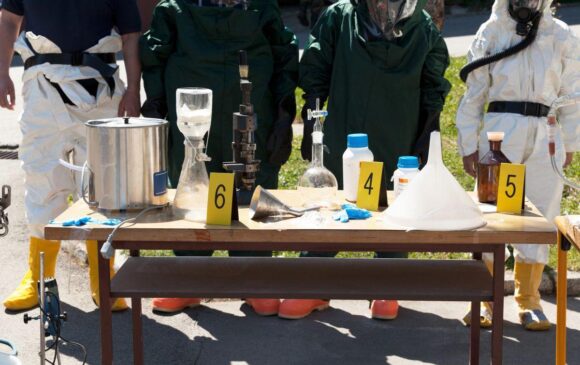
Certified biohazard technicians approach fentanyl cleanup with personal protective equipment rated for chemical exposure, not just gloves and a mask. The cleaning agents used are EPA Registered Hospital Disinfectants that are appropriate for the specific contamination present. In many cases, porous materials cannot be decontaminated at all and must be safely removed and disposed of as regulated waste.
Ventilation and air quality are part of the process too. If fentanyl particles have become airborne or settled into a duct system, surface cleaning alone won’t make a space safe. The job has to be approached holistically, with documentation at the end confirming the property has been cleared to a safe standard.
Our team has been doing this work in Dallas, Fort Worth, Arlington, Plano, McKinney, and surrounding areas for nearly two decades. Every technician on our crew is properly certified and trained for exactly these situations. We don’t use subcontractors, so you always know who is in your property and what standards they’re working to. And because we provide upfront, firm pricing before any work begins, there are no surprises on the back end.
The Risk of a DIY Approach
We understand the impulse to handle things yourself, especially if cost or privacy is a concern. But with fentanyl, the consequences of an incomplete cleanup can be severe. Secondary exposure has harmed people who had no idea a property was contaminated. Children and pets are especially vulnerable because of their smaller body weight relative to a given dose.
Beyond the health risk, an improperly cleaned property may not pass inspection or may create liability for a landlord or property owner down the road. Professional documentation of a cleared cleanup protects you legally as well as physically.
Discretion matters too, and we take it seriously. Our team arrives and works with complete confidentiality. We can also communicate with your insurance provider on your behalf if that’s helpful, which takes one more thing off your plate during what is already a stressful situation.
When You’re Not Sure, Please Ask
If you have any reason to believe a property in the Dallas or Fort Worth area has been exposed to fentanyl or another drug, please don’t wait. The longer residue sits, the more it can spread or be disturbed by ordinary foot traffic. We offer free estimates and are available around the clock, every day of the year.
Give us a call or drop us an email with any questions. We’re here to help you figure out the right next step, without pressure and without judgment.